
Eugene Lang was an American philanthropist who gave over $150 million to stimulate education during his lifetime. LEARN! co-founder Douglas Makepeace tells this story about meeting Mr. Lang:
I met Gene at a charity event, and asked if he gave money to other causes than education.Mr. Lang died in 2017. Here is a link to an article about him worth reading: Eugene Lang, Washington Post Emily Langer April 11, 2017"No," he said. "Nothing else matters!"
I said that I supported a group that stops people around the world from killing each other, which seems important.
"No," he said. "If you don't educate their children, they will just grow up and kill each other."
Paul Jones, a famous investor, was inspired by Gene Lang's example. Soon Jones' Robin Hood Foundation, which 'takes from the rich and gives to the poor' like Robin Hood, began making the same promise to whole classes of high school students in poor areas of New York. If they could just get into a college, he would give them the money to go.
He and Forbes Magazine did a comprehensive study on what America would gain by investing in various sectors of the economy.
These are their estimates. We should invest $6 trillion in education over the next 20 years. The expected payoff: $225 trillion. That's almost 40 times the investment!
No other sectors (e.g. healthcare and infrastructure) come close to providing that return.
So to answer the question of "why education?"
Because educating people will repay us much more than anything else we can do!
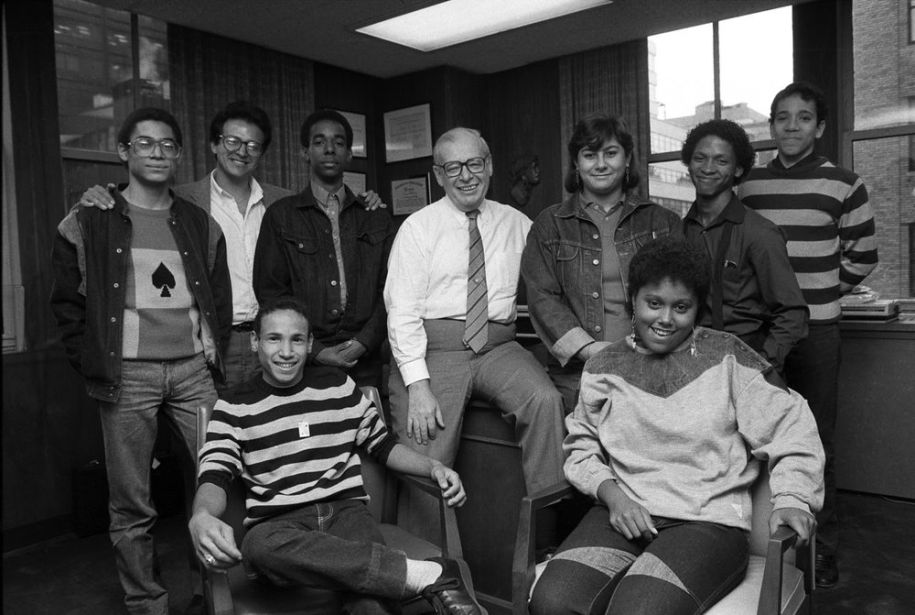
Mr. Lang with graduates of his old school in 1985 (Chester Higgins Jr./New York Times)
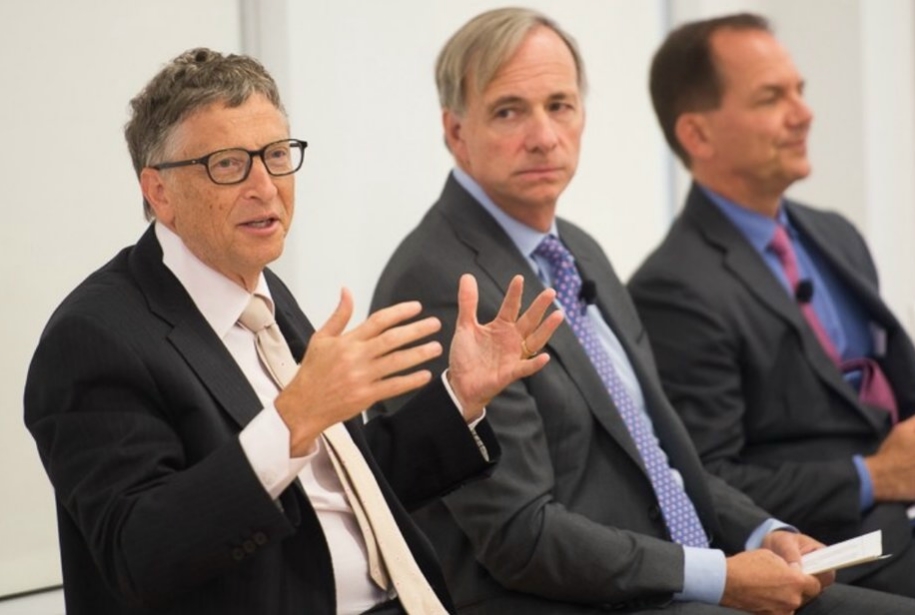
Bill Gates, Ray Dalio, Paul Tudor Jones
Why Reading?
Elon Musk read every book in his local library by the time he was 10. Then he read The Encyclopedia Britannica. "How else do you know what you don't know?" he asked Charlie Rose.
Warren Buffett was once asked about the key to success. He pointed to a stack of nearby books and said, "Read 500 pages like this every day. That's how knowledge works. It builds up, like compound interest. All of you can do it..."
Bill Gates: "These days, I also get to visit interesting places, meet with scientists, and watch a lot of lectures online. But reading is still the main way that I both learn new things and test my understanding."
Charles Darwin: "... to my mind there are no advantages and many disadvantages in lectures compared with reading."
Slow readers are slow learners - great readers are great leaders!
Reading is the most important skill. Every subject is easier for those who read well. Reading widely adds perspective and understanding.
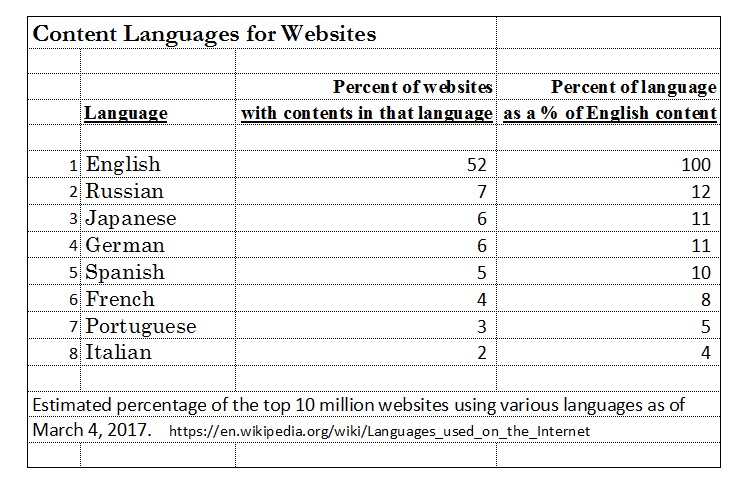
On the internet today, most everyone can read almost anything. But they have to read English. Other languages have almost 90% fewer pages on the Internet
Also, reading is more than an isolated skill! If a student fails to read English, writing is harder, and so is reading math problems. Overall learning can fall, and even worse, their self-esteem and resilience will fall. No one gets everything right the first time. The motivation to keep trying is crucial in every area of learning.
Now if reading improves, then writing and math can improve, and so can self-esteem. The vicious circle that can cause students to fail can be reversed!
Thoughts on Education, Blog by Douglas Makepeace
"I am one of the lucky people. Yet when I was 40, I had accomplished so much less than my heroes. Then I started to read like Musk and Buffett and Gates and Clinton and Edison and Darwin and Bach." ~ Douglas Makepeace
-
May 16, 2017 - A Very Brief History of Education
-
Jan. 23, 2017 - Visual Learning versus Classrooms and Lectures
- Mar. 17, 2017 - My journey from Lock-step Schooling to Own-speed learning
Thoughts on re-creating education from other thinkers
- Sugata Mitra, Educational Researcher
Sugata's famous Hole in the Wall project demonstrated how young kids could figure out how to use a PC to learn on their own. More amazingly, those kids could learn almost anything in groups of four. Click here to listen to his speech. - Daphne Koller, Co-founder, Coursera
Daphne Koller gave a wonderful TED Talk - an inspiration to everyone who is helping the use of technology to will improve education for everyone. - Bill Gates, Philanthropist
"Personalized learning is shaking up the classroom and letting students go at their own pace.""One study found that among 62 schools using personalized learning, students made more progress in two years than their peers at other schools. They started below the national average in reading and math; two years later, they were above it."
Click here to read more on what Bill Gates has written on improving education.
- Salman Khan, American Educator
Sal Khan of Khan Academy wrote a book in 2012 called "The One World Schoolhouse: Education Reimagined." He explains the history of education, and how to improve what we have been doing for the last hundred years, and what the future might look like. - Rob Hutter, Learn Capital
Read Rob Hutter's article on how undervalued tech companies are from the website of Learn Capital. This is a venture capital company that only invests in education ventures. - Jonathan Knee, The Atlantic
Read Jonathan A. Knee's article on "Why For-Profit Education Fails." - CB Insights
CB Insights presents a very insightful report on "Analyzing Ed Tech Performance," A data-driven look at ed tech deals and funding activity.
Reading in India
In India, hundreds of millions need to read English better. Here is a link to a comprehensive article, "India: Learning a Hard Lesson," about education in India today. This appeared in the Financial Times, in May of 2015. Note that you must to be an online subscriber to the Financial Times to read this article.
Elementary school pupils across India could benefit enormously. Programmers need to be fluent in reading English to take the Udacity courses that could enhance their careers.
Professor Amartya Sen is a Thomas W. Lamont University Professor, and Professor of Economics and Philosophy at Harvard University. He is the recipient of the 1998 Nobel Prize in Economics and an honorary fellow of LSE. He is a penetrating observer of conditions in India. He is also an articulate reporter of what needs to be done.
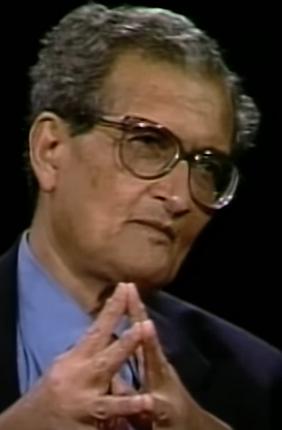
"India is the only country in the world which is trying to become a global economic power with an uneducated and unhealthy labor force," says Amartya Sen in a recent discussion at the London School of Economics. The Nobel laureate and author of The Argumentative Indian is in the habit of bringing up inconvenient truths and this was one of them.Professor Sen's ironical point was that it couldn't be done. India can't sustain economic growth without improving the quality of its workers.
You would think this is a situation crying out for tech startups to step in. A huge population hungry for education as an escape from poor living standards, a new government promising economic reforms to spur growth and development, and a booming tech startup scene attracting billions of dollars in funding - they make a heady cocktail for edtech entrepreneurs and investors.
The media is full of stories about how ed tech is transforming education in India, and how edtech startups are "raising millions to provide millions with world-class education." The reality is sobering. Edtech, despite its great need and potential in India, isn't setting the venture capital scene on fire."
So far, ed tech investment in India has been minimal, and so has the progress in education there. But as Charles McIntyre of IBIS Capital has documented, digital media is now 40% of global media - and digital education will surely catch up from its lowly 4% today.
According to a Time Magazine article in July 2014, "More Children Are Going to School in India, but They're Learning Less," there's a literacy problem in Indian schools, and not just in English. A third of all grade 3 students can't read at all in their native language. Roughly half of all grade 5 students cannot manage reading level grade 2 text.
The reasons for this decline in literacy problem include the rush to build schools and bring back children to the education fold, student absenteeism and teachers misconduct, where teachers were found to have forged their degrees in the eastern Indian state of Bihar. Increase in investments and further professional developments would likely be needed to help solve the problem.
The interactive Thor reading steps on Android-based smartphones and tablets and computers will help people everywhere to read English. We are working to help a billion people read much better, at a fraction of the expense required for normal classroom teaching.